
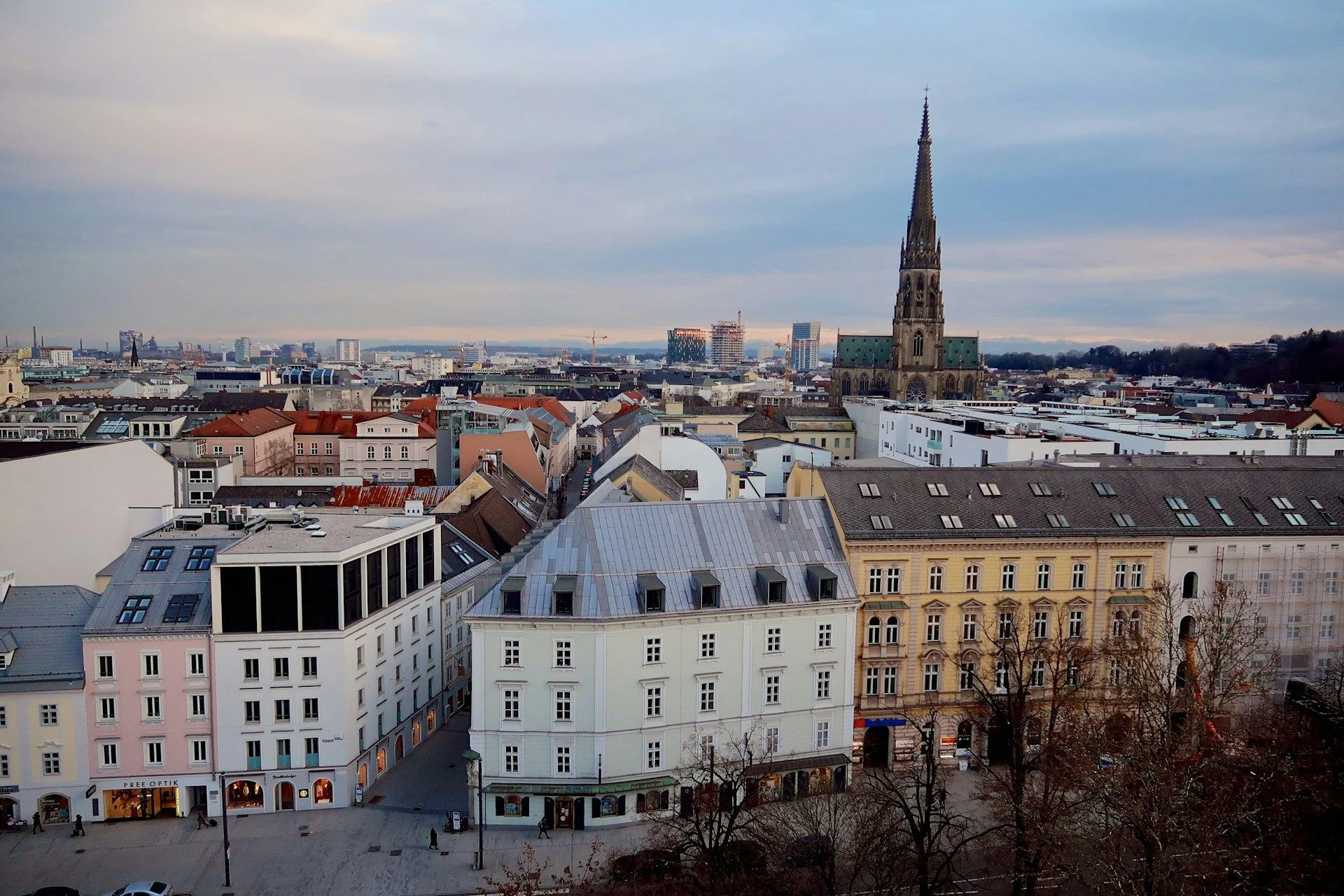
Commercial buildings in LinzStrategic buildings across active districts
Best offers
in Upper Austria
Benefits of investing in commercial real estate in Linz


Local demand drivers
Demand in Linz stems from manufacturing and Danube logistics, a stable public sector and healthcare base, university-linked tech activity and tourism-supported retail, yielding long industrial leases and shorter retail or office terms
Asset types and strategies
Common segments in Linz include logistics and industrial near the Danube port and highway corridors, high-street retail around Hauptplatz, central and suburban office grades, hospitality for business travel, and value-add repositioning or core leasing
Expert selection support
VelesClub Int. experts define strategy, shortlist assets and run screening with tenant quality checks, lease structure review, yield logic assessment, capex and fit-out assumptions, vacancy risk analysis and a tailored due diligence checklist
Local demand drivers
Demand in Linz stems from manufacturing and Danube logistics, a stable public sector and healthcare base, university-linked tech activity and tourism-supported retail, yielding long industrial leases and shorter retail or office terms
Asset types and strategies
Common segments in Linz include logistics and industrial near the Danube port and highway corridors, high-street retail around Hauptplatz, central and suburban office grades, hospitality for business travel, and value-add repositioning or core leasing
Expert selection support
VelesClub Int. experts define strategy, shortlist assets and run screening with tenant quality checks, lease structure review, yield logic assessment, capex and fit-out assumptions, vacancy risk analysis and a tailored due diligence checklist








Useful articles
and recommendations from experts
Practical guide to commercial property in Linz
Why commercial property matters in Linz
Commercial property in Linz underpins local liquidity and capital allocation for businesses and investors. Linz sustains demand through a mix of manufacturing activity, professional services, regional healthcare and education facilities, and an established logistics base. Office space in Linz is required by corporate back-office functions, small and medium professional firms, and public sector operations. Retail space in Linz serves both resident catchments and visitors to central corridors, while hospitality assets respond to business travel and regional tourism. Warehouse property in Linz supports domestic distribution and last-mile supply for e-commerce and manufacturing inputs. Buyers include owner-occupiers seeking operational continuity, investors looking for income or value appreciation, and specialist operators that manage leasing and tenant services. For decision-makers, commercial real estate in Linz is a tool to secure operational cost certainty or to generate durable rental cash flows tied to regional economic cycles.
The commercial landscape – what is traded and leased
The market inventory in Linz comprises traditional business districts with multi-storey offices, high street retail corridors with street-level trading, neighborhood retail serving daily needs, business parks with small industrial units, and logistics zones positioned for motorway and rail access. There are also clusters of hospitality and short-term accommodation oriented toward conference and corporate demand. Lease-driven value dominates where tenant covenants, lease length and indexation determine pricing – typical for offices and retail in central locations. Asset-driven value emerges when physical factors such as site configuration, redevelopment potential, or alternative use create upside – often relevant for older industrial plots or mixed-use buildings. Investors and buyers therefore separate opportunities into predominantly yield-focused leases versus repositioning plays where capex can alter future income. Understanding which side of that spectrum a listing sits on is essential to underwrite risk and to set an acquisition horizon.
Asset types that investors and buyers target in Linz
Retail space in Linz ranges from prime street-front units in core corridors to local convenience shops in residential areas. High street retail typically trades on footfall and visibility, with short to medium lease terms and tenant turnover risk concentrated in certain categories. Neighborhood retail is more defensive versus economic cycles but may have lower headline rents. Office space in Linz includes prime central business locations with modern floorplates and secondary suburban offices that serve local employers and government functions. The prime vs non-prime distinction is driven by location, building systems, and the ability to attract credit-strong tenants. Hospitality and restaurant-cafe-bar premises respond to business travel patterns and local leisure demand; these assets require active operating input and are more exposed to seasonality. Warehouse and light industrial units are assessed by clear metrics – ceiling height, yard capacity, access to arterial routes and the ability to support e-commerce logistics. Revenue houses and mixed-use buildings are pursued for rental diversification and the potential to convert uses where zoning permits. There is also a serviced office angle in Linz where flexible leases and managed workspace can command premium effective rents but require active management. Supply chain shifts toward online retail increase strategic interest in last-mile warehouse property in Linz, while limited development land in inner areas can make adaptive reuse of older buildings economically attractive.
Strategy selection – income, value-add, or owner-occupier
Three principal strategies are common: income focus, value-add, and owner-occupier purchase. An income focus targets properties with stable, long-term leases and low operational intervention – suitable where tenant credit and lease indexation provide predictable cash flow. In Linz this is most evident in well-let office buildings with public sector tenants and long-leased retail anchors. Value-add involves acquisitions that require refurbishment, repositioning or active re-leasing to lift net operating income – practical when a building is technically sound but functionally outdated. Local drivers for value-add include supply constraints in central locations and the potential to enhance energy performance or reconfigure floor plans to modern standards. Owner-occupier logic centers on securing a location that fits operational needs while managing occupancy cost volatility; purchase can be attractive if occupancy certainty and asset control are priorities. Local factors that influence these choices include business cycle sensitivity in manufacturing and export-oriented sectors, tenant churn norms in retail corridors, seasonal tourism effects on hospitality, and administrative or planning intensity that affects redevelopment timelines. Each strategy demands a matching time horizon, capital allocation plan and risk tolerance specific to Linz market dynamics.
Areas and districts – where commercial demand concentrates in Linz
Demand concentrates where accessibility, visibility and population or employment density intersect. A central business district and riverfront corridors typically attract offices and higher-end retail due to proximity to transport nodes and visitor flows. Emerging business areas and suburban office parks draw occupiers that prioritize cost-effective space and vehicle access. Industrial and logistics demand clusters close to motorway links, rail spurs and established freight corridors where last-mile distribution and manufacturing supply chains converge. Tourism corridors and locations near cultural or convention facilities support hospitality and leisure-oriented retail. Residential catchments create steady demand for neighborhood retail and local services. When evaluating locations in Linz, investors assess CBD strength versus emerging nodes, transport nodes and commuter flows, proximity to logistics infrastructure, and the risk of oversupply in areas with concentrated recent development. This district framework helps prioritize assets for different strategies without relying on a fixed neighborhood list.
Deal structure – leases, due diligence, and operating risks
Deal assessment in Linz emphasizes lease documentation and operational exposure. Buyers review lease term and remaining duration, tenant credit quality and concentration, break options and notice periods, and indexation clauses that preserve real income. Service charge regimes, responsibility for common area maintenance, and fit-out obligations materially affect operating margins. Due diligence covers title and encumbrances, building condition surveys, energy performance certificates and compliance with local building regulations, as well as historical operating accounts to identify recurring maintenance and capex needs. Vacancy and reletting risk must be modeled against local demand cycles and market rent trends. Operating risks include concentrated tenant exposure, deferred capex, and regulatory compliance that can require immediate investment. It is standard practice to develop a capex reserve schedule and stress-test cash flows under different vacancy and rental growth scenarios. These steps help separate negotiation variables that are contract-specific from structural risks inherent to the asset and location.
Pricing logic and exit options in Linz
Pricing is determined by location and footfall, tenant quality and remaining lease term, building condition and future capex needs, and the potential for alternative uses under local planning. Properties with long leases to strong covenants will typically trade at higher pricing that reflects lower rental re-letting risk. Assets that require refurbishment or repositioning will price in capex and execution risk, creating spread for value-add purchasers. Alternative use potential, such as conversion to mixed-use or higher-density commercial use, can materially affect terminal value where zoning and approvals align. Exit options in Linz include holding to capture income and potentially refinance as cash flows stabilize, re-leasing intact premises to improve income and saleability, or executing a repositioning program to sell on after capital improvements. The chosen exit should align with the original investment horizon and consider local market liquidity – central assets with multiple buyer types generally offer broader exit pathways than highly specialized industrial facilities.
How VelesClub Int. helps with commercial property in Linz
VelesClub Int. supports investors and occupiers through a structured selection and execution process tailored to Linz. We start by clarifying investment or occupation objectives, time horizon and acceptable risk parameters. Next we define target segments and district types that match those objectives, whether that is income-focused offices, retail space in Linz for cashflow, or warehouse property in Linz for logistics exposure. Shortlisting is based on lease profiles, tenant concentration, technical condition and potential upside. We coordinate technical and financial due diligence, compile transactional documentation for review and advise on commercial negotiation points without providing legal advice. For value-add plays we assist in scoping capex and phasing, and for owner-occupiers we model occupancy cost scenarios and reconfiguration options. All recommendations are calibrated to the client’s capabilities and exit preferences to ensure alignment between acquisition and operational planning.
Conclusion – choosing the right commercial strategy in Linz
Selecting the right commercial strategy in Linz requires matching asset type, location and lease profile to an investor or occupier’s time horizon and risk appetite. Income strategies favor long leases and credit tenants, value-add relies on technical execution and repositioning potential, and owner-occupier purchases prioritize operational fit and occupancy certainty. Pricing and exit options follow from those strategic choices and from local drivers such as transport access, sector concentration and supply dynamics. For anyone looking to buy commercial property in Linz or to refine a shortlist of opportunities, consult VelesClub Int. experts for a tailored screening and strategy review. VelesClub Int. can assist with target definition, asset selection and the coordination of due diligence to help translate market insight into practical transaction steps.