
Commercial real estate in Salzburg regionStrategic assets across active submarkets
Popular
cities and regions in Austria
Best offers
in Salzburg Region
Benefits of investing in commercial real estate in Salzburg region


Three rhythms
Salzburg region matters because the city, airport belt and alpine districts create three linked commercial rhythms, so buyers can read year-round services, transit demand and tourism spending without forcing one market story
Exact fit
Office and mixed-use buildings fit best around Salzburg city and Wals-Siezenheim, while hospitality premises, trade units and support property read strongest where airport access, valley traffic and resort servicing clearly shape occupier need
Postcard trap
Many buyers judge Salzburg region through old-town prestige alone, yet stronger decisions come from local function, because a city office, an airport-side trade unit and a Zell am See hospitality asset work differently
Three rhythms
Salzburg region matters because the city, airport belt and alpine districts create three linked commercial rhythms, so buyers can read year-round services, transit demand and tourism spending without forcing one market story
Exact fit
Office and mixed-use buildings fit best around Salzburg city and Wals-Siezenheim, while hospitality premises, trade units and support property read strongest where airport access, valley traffic and resort servicing clearly shape occupier need
Postcard trap
Many buyers judge Salzburg region through old-town prestige alone, yet stronger decisions come from local function, because a city office, an airport-side trade unit and a Zell am See hospitality asset work differently








Useful articles
and recommendations from experts
Commercial property in Salzburg region by three rhythms
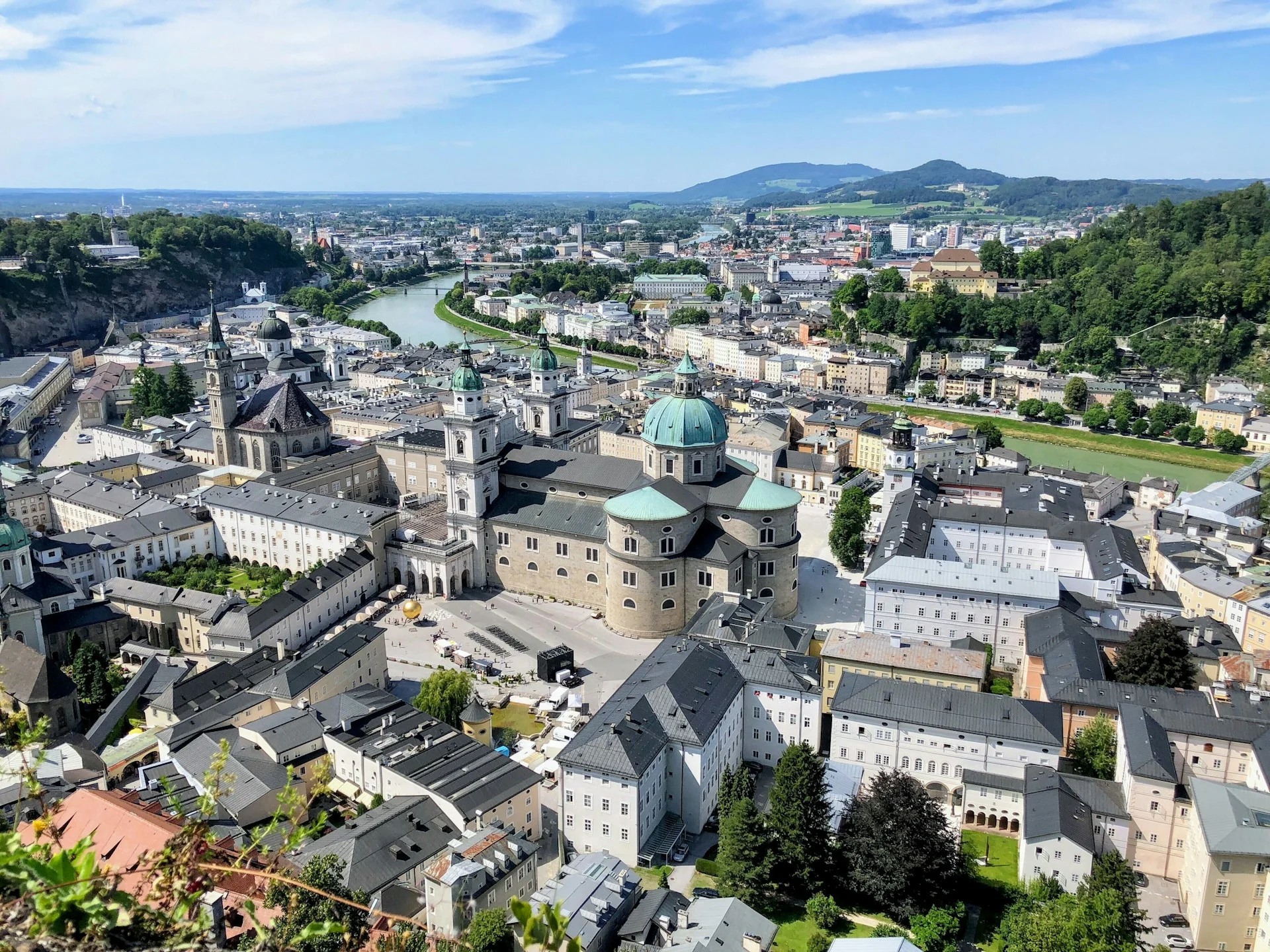
Commercial property in Salzburg region matters because the region works through three commercial rhythms at once. The first is the Salzburg city core, where administration, culture, healthcare, education, hospitality and daily urban services create the strongest office and mixed-use benchmark. The second is the airport and motorway belt around Wals-Siezenheim and the western edge of the city, where access, business travel, trade support and practical servicing become more important than central prestige. The third is the alpine and valley economy stretching into Pongau and Pinzgau, where hospitality, food-led property, year-round resort servicing and visitor demand create a completely different commercial logic.
That combination makes Salzburg region commercially richer than a simple tourism label suggests. Buyers who look only at the old town and hotel economy miss the strength of offices, healthcare-linked premises, district retail and airport-facing business space. Buyers who focus only on practical business parks miss how much value is created by city density, cultural demand and high-frequency visitor movement. The region becomes readable once each building is judged by the rhythm it belongs to rather than by a single image of Salzburg.
Why Salzburg region works through three layers
Salzburg region deserves its own commercial reading because it is neither a classic metro region nor a pure mountain economy. It is a compact state where one city carries most of the office and service weight, the western edge carries the movement-based commercial layer, and the southern and western alpine districts carry the hospitality and leisure economy. These layers are linked, but they do not reward the same formats in the same way.
This matters because broad regional averages can be misleading here. A building in central Salzburg, a trade-oriented property near the airport and a mixed-use hospitality asset in a mountain town may all look commercially attractive, yet they answer completely different forms of demand. In Salzburg region, the stronger comparison is not central versus peripheral. It is city, belt or resort. VelesClub Int. helps keep that structure clear when the region is often reduced to one cultural identity.
The city core gives Salzburg region its office benchmark
Office space in Salzburg region begins with Salzburg city because no other part of the region combines administration, education, healthcare, tourism-related services, retail and regular weekday movement at the same scale. This gives the city the clearest benchmark for offices, mixed-use buildings and service-led premises that depend on year-round professional use rather than on seasonal traffic alone.
For buyers, this means a central Salzburg asset is strongest when it belongs to a real urban service pattern. A building may justify value through occupier continuity, transport convenience, hospitality spillover and the ability to support surrounding convenience demand. The strongest office and mixed-use stock in Salzburg region is not simply the most visible stock. It is the stock embedded in daily working life.
Wals-Siezenheim changes commercial property in Salzburg region
Wals-Siezenheim gives Salzburg region one of its most important practical layers. Proximity to the airport, strong road access, large-format service uses and daily business movement create a commercial environment that is very different from the city core. This part of the region is especially relevant for trade premises, business parks, airport-facing hotels, mixed operational buildings and smaller logistics-related formats that need usability more than prestige.
That makes the western belt commercially significant in its own right. A building here should not be judged as a cheaper version of central Salzburg. It belongs to a different market pattern, one where access, timing, servicing role and replacement difficulty can matter more than symbolic address quality. In Salzburg region, this is where practical business property becomes easiest to justify.
Hallein and the valley towns widen service demand in Salzburg region
South of the city, places such as Hallein and the main valley towns widen the commercial picture again. They support local administration, healthcare, education, food-led trade, mixed-use centres and practical service property tied to repeated daily use. They also benefit from movement through the region without depending entirely on mountain tourism.
This matters because many buyers underestimate the value of smaller service centres in Salzburg region. A building in Hallein or a comparable valley location may be commercially convincing because it serves stable local needs, not because it borrows the strongest tourism or city-centre narrative. In a region where so much attention goes to Salzburg city itself, that quieter service layer can create steadier occupier logic than first impressions suggest.
Pongau and Pinzgau make hospitality in Salzburg region uneven
Hospitality property is clearly important in Salzburg region, but the alpine districts should never be treated as one uniform resort market. St. Johann im Pongau, Zell am See and the wider tourism areas in Pongau and Pinzgau all attract visitor demand, yet they do not produce the same rhythm. Some places depend on winter peak intensity. Others work through a broader year-round mix of leisure, sports, nature and domestic tourism. Others behave more like service hubs for nearby resorts than classic destination centres themselves.
That is why hospitality units, food-led premises and visitor-facing mixed-use buildings in Salzburg region must be judged through exact local role rather than through mountain scenery alone. A resort-facing restaurant, a year-round service retail unit and a mixed-use building in a regional tourism centre can all work, but not through the same operating model. The strongest hospitality assets are usually those whose local customer rhythm is fully understood.
Corridor access shapes warehouse property in Salzburg region
Warehouse property in Salzburg region should be read selectively, but it should not be ignored. This is not one of Europe's largest freight basins, yet the region still needs storage, food distribution, maintenance yards, hotel supply handling, vehicle services and practical trade units to support both urban life and the alpine economy. The strongest operational properties are rarely the largest. They are the ones that solve a real daily servicing problem.
This makes access especially important. The belt west of the city, the motorway-oriented zones and the valley-floor business locations are usually more relevant than visually stronger but less practical sites. In Salzburg region, a modest support building in the right position can be more commercially useful than a larger asset with weaker access because replacement stock is limited where businesses actually need it. VelesClub Int. helps compare these operational formats through function rather than through raw scale.
Retail space in Salzburg region follows local routine before image
Retail space in Salzburg region is broader than one old-town shopping circuit and one resort promenade. The region supports food-led trade, pharmacies, health and beauty services, convenience units, mixed-use ground floors and practical district retail across Salzburg city, the surrounding belt and the valley towns. What changes from place to place is not whether retail works, but which customer routine drives it.
In the city, office workers, residents, students and visitors often overlap. In the airport and western belt, practical services and movement-led spending matter more. In resort zones, hospitality and visitor demand can lift certain units, but only if seasonality is right. A strong retail building in Salzburg region is usually the one that sits inside a reliable pattern of repeated use rather than the one with the strongest postcard effect.
Pricing across Salzburg region follows rhythm and access
Pricing in Salzburg region can look simple from a distance because the city dominates perception. In practice, the region contains several different value systems. A central office or mixed-use block may price around year-round urban continuity. An airport-facing trade unit may derive value from access and practicality. A resort-linked hospitality asset may depend on season length, customer profile and support costs. A service building in a valley town may work through daily necessity rather than visibility.
That means two buildings of similar size can have almost nothing in common commercially. One may serve administration and healthcare. Another may serve airport-linked business. A third may serve mountain hospitality. A stronger reading of commercial property in Salzburg region begins with one question: which rhythm keeps the building relevant every week of the year.
Questions that clarify commercial property in Salzburg region
Why can a Hallein or Wals-Siezenheim asset be more practical than a louder city-centre building in Salzburg region
Because the right building there can serve stable daily business needs, from healthcare and local services to airport-facing trade and practical commercial use. A clearer local role can sometimes create steadier occupier logic than a more expensive central address.
When is office space in Salzburg region more convincing than buyers first expect
Usually when it sits in Salzburg city or a strong valley service centre where administration, healthcare, education and daily mixed-use activity reinforce one another. The stronger comparison is by service ecosystem, not by image.
Why can support property in Salzburg region matter more than buyers first expect
Because the region still needs storage, maintenance, food supply and trade-support buildings for the city, the airport belt and the alpine economy. Useful operational stock is limited, so the right unit can become more valuable than its size suggests.
How should buyers compare Salzburg city and Zell am See in commercial terms
Not as direct substitutes. Salzburg city usually reads more strongly through offices, mixed-use urban demand and year-round services, while Zell am See often makes more sense through hospitality, visitor-serving retail and resort-linked mixed use.
Why can a district retail unit in Salzburg region read better than a prime tourism address
Because repeated local spending, easier access and reliable daily use can create steadier occupancy logic than a more visible property that depends on higher seasonality and less predictable visitor flow.
A clearer commercial view of Salzburg region
Salzburg region is commercially relevant because it combines three different but linked markets inside one compact territory. The city anchors office and service depth. The airport and western belt make practical business property and support space more meaningful than first impressions suggest. The alpine districts keep hospitality and visitor-led mixed use commercially important but highly uneven.
The strongest way to read commercial property in Salzburg region is therefore by rhythm, access, local continuity and servicing need. Different assets make sense here for different reasons, and the region rewards buyers who match format to role instead of chasing one simplified culture-and-mountains narrative. VelesClub Int. helps turn broad interest in Salzburg region into a calmer and more practical commercial framework.