
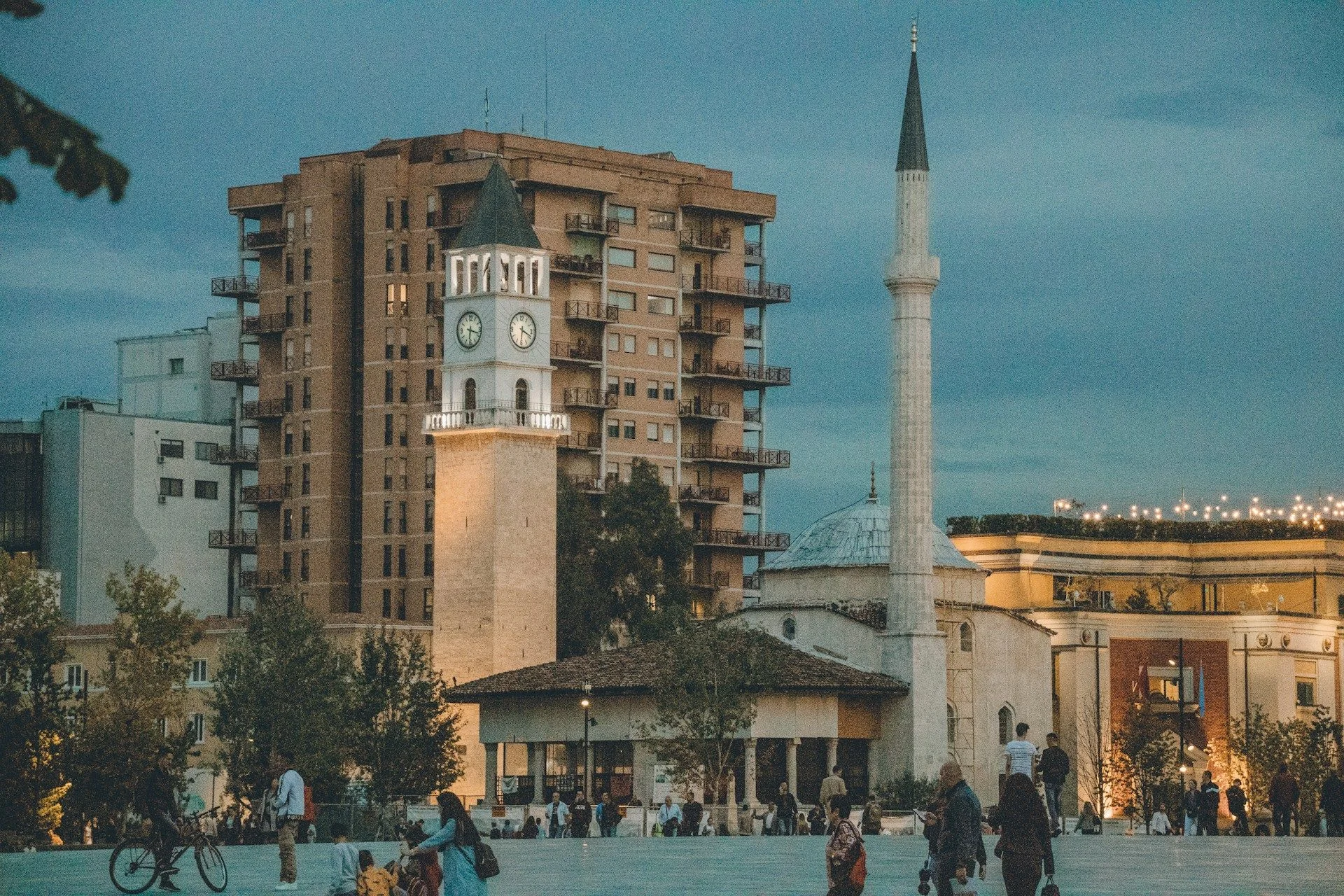
Commercial buildings in TiranaBusiness assets aligned with demand
Best offers
in Albania
Benefits of investing in commercial real estate in Tirana


Local demand drivers
Concentration of government offices, growing service and tech firms, universities and healthcare providers, plus tourism and logistics corridors around Rinas and Durres support stable demand, implying a mix of long-term institutional leases and retail demand
Asset types and strategies
Office conversions and core office assets in central Tirana coexist with high-street retail, neighborhood retail, hospitality and logistics-linked warehouses, supporting strategies from core long-term leases to value-add repositioning and mixed-use redevelopment options
Expert selection support
VelesClub Int. experts define investment strategy, shortlist local assets and run rigorous screening including tenant quality checks, lease structure review, yield logic assessment, capex and fit-out assumptions, vacancy risk analysis and due diligence checklist
Local demand drivers
Concentration of government offices, growing service and tech firms, universities and healthcare providers, plus tourism and logistics corridors around Rinas and Durres support stable demand, implying a mix of long-term institutional leases and retail demand
Asset types and strategies
Office conversions and core office assets in central Tirana coexist with high-street retail, neighborhood retail, hospitality and logistics-linked warehouses, supporting strategies from core long-term leases to value-add repositioning and mixed-use redevelopment options
Expert selection support
VelesClub Int. experts define investment strategy, shortlist local assets and run rigorous screening including tenant quality checks, lease structure review, yield logic assessment, capex and fit-out assumptions, vacancy risk analysis and due diligence checklist








Useful articles
and recommendations from experts
Practical guide to commercial property in Tirana
Why commercial property matters in Tirana
Commercial property in Tirana functions as a barometer of the city’s economic structure and a channel for capital allocation across sectors. The concentration of public services, growing private professional firms, and tourism-driven hospitality demand creates clear demand for office space, retail space in Tirana, and hotel or short-stay assets. Health services and private education have been expanding, adding a steady requirement for specialized premises. Industrial users and logistics operators are present at the city’s edges where land and access costs allow warehouses and light manufacturing. Buyers range from owner-occupiers requiring tailored premises to institutional and private investors seeking rental income or capital appreciation, and operators that acquire assets to manage hospitality, retail, or serviced-office portfolios. Understanding how each sector drives demand in Tirana is a necessary first step for any buyer or investor review.
The commercial landscape – what is traded and leased
The traded and leased stock in Tirana is heterogeneous. Central districts present office blocks and high street retail corridors that trade on footfall, corporate tenancy, and visibility. Neighborhood retail and small service premises populate residential catchments and are typically lease-driven with shorter tenures and higher churn. Business parks and multi-tenant office buildings serve larger corporate and professional services tenants and often trade on stabilized rental rolls. Logistics zones and industrial estates at the urban fringe support warehousing and last-mile distribution; these properties are more asset-driven because land, clear heights, and vehicular access determine usability. In Tirana the difference between lease-driven value and asset-driven value is pronounced: lease-driven assets price primarily on contractual income and tenant credit, whereas asset-driven properties reflect redevelopment potential, conversion flexibility, or land value. Investors and occupiers need to separate cashflow characteristics from physical and locational attributes when assessing a deal.
Asset types that investors and buyers target in Tirana
Retail space in Tirana can range from prime high-street units where visibility and pedestrian flow support premium rents to neighborhood outlets that serve day-to-day household demand and trade on convenience rather than volume. High-street retail competes on location and tenant mix, while neighborhood retail competes on local catchment and lease terms. Office space in Tirana splits into prime central offices aimed at professional firms and lower-cost, secondary offices that appeal to start-ups and local SMEs; the prime versus non-prime distinction drives leasing covenants, fit-out expectations, and indexation structures. Hospitality and short-stay hotels cater to both business travel and leisure, with seasonality affecting revenue. Restaurant-cafe-bar premises are commonly leased or sold with specific fit-out responsibilities that affect capex requirements for incoming operators. Warehouse property in Tirana is increasingly assessed through e-commerce and supply-chain lenses: clear spans, yard access, and proximity to arterial roads influence operational cost for logistics users. Revenue houses and mixed-use buildings that combine retail at ground level with residential above are frequent in transitional corridors and carry a mix of lease types and regulatory considerations. Serviced office operators and co-working formats create a layer of flexible tenancy that changes rental duration dynamics and tenant churn patterns; these formats are particularly relevant where short-term demand and business formation are strong.
Strategy selection – income, value-add, or owner-occupier
Choosing between income, value-add, and owner-occupier strategies requires aligning asset characteristics with macro and local drivers in Tirana. An income-focused approach emphasizes long-term leases to established tenants, indexation mechanisms, and low vacancy risk; it suits investors prioritizing predictable cashflow in central locations or stabilized business parks. A value-add strategy targets properties with deferred maintenance, mispriced leases, or underutilized floors where refurbishment, repositioning, or a change of use can materially increase asset value; in Tirana this may be practical for secondary office blocks near improving corridors or obsolete industrial buildings near redevelopment nodes. Mixed-use optimization blends these lenses by combining retail frontage to capture footfall with residential or office components to diversify income and reduce single-sector exposure. Owner-occupier logic centers on operational control, fit-out customization, and often superior control over capex timing; owner-occupiers accept lower liquidity for operational advantages. Local factors that push each strategy include business cycle sensitivity in professional services, tenant churn norms among local retailers, tourism seasonality affecting hospitality cashflow, and the intensity of municipal permitting for repositioning projects. An analytical selection weighs these influences against financing availability and the investor’s time horizon.
Areas and districts – where commercial demand concentrates in Tirana
Concentration of commercial demand in Tirana follows a predictable pattern driven by access, visibility, and institutional clustering. The central business district concentrates corporate offices, professional services, and premium retail; proximity to public administration and major arteries supports higher rents and more structured leasing. The Blloku area functions as a consumer and hospitality cluster with elevated demand for restaurants, cafes, boutique hotels, and lifestyle retail. The Durrës Road corridor operates as a mixed commercial axis that includes high-street retail and vehicle-oriented services, and it often proves important for businesses needing quick access to regional transport. The Kombinat industrial zone and similar peripheral industrial areas host warehouses and light manufacturing, offering lower land cost but requiring careful assessment of access and utilities. When comparing these areas buyers should use a district selection framework that weighs CBD versus emerging business areas, transport nodes and commuter flows, tourism corridors versus residential catchments, industrial access and last-mile routes, and competition or oversupply risk. Each district type imposes different capex needs, leasing expectations, and exit dynamics that must be integrated into underwriting.
Deal structure – leases, due diligence, and operating risks
Deal structure in Tirana hinges on lease terms, asset condition, and operating cost allocation. Buyers typically review lease term and remaining duration, break options and tenant incentives, indexation clauses and how rents adjust over time, and service charge regimes that clarify landlord and tenant responsibilities. Fit-out responsibilities and the handback condition are critical for hospitality, retail, and specialized office spaces because they determine near-term capex. Vacancy and reletting risk must be modelled with local assumptions about lease-up timelines and tenant demand; tenant concentration risk has outsized impact where a single large occupant represents a major share of income. Due diligence should cover physical condition, compliance with building codes, utility capacity for intended use, and known deferred maintenance that produces near-term capital calls. Environmental matters matter for warehouse and light industrial assets, and operational permits or licensing can affect hospitality and healthcare assets. Capex planning and operating cost forecasts should include conservative allowances for unexpected works and market-standard contingencies. These reviews are commercial and technical; buyers should engage appropriate advisors for detailed inspections while keeping strategic risk allocation central to negotiation positions.
Pricing logic and exit options in Tirana
Pricing drivers for commercial real estate in Tirana reflect location and footfall, tenant credit and lease length, building quality and immediate capex requirements, and alternate use potential. Properties with long, indexed leases to creditworthy tenants command pricing that reflects discounted contractual cashflow, whereas assets with short leases or vacant floors trade at discounts tied to reletting costs and leasing market risk. Building condition and systems determine near-term capital expenditure and therefore adjust pricing down for assets needing refurbishment. Alternative use potential—such as conversion of underused offices to mixed-use or redevelopment of obsolete industrial land—creates upside that investors price into bids when planning permissions and market demand align. Exit options include hold-and-refinance strategies to extract liquidity while maintaining ownership, re-lease-and-exit where new tenancy stabilizes cashflow prior to sale, and reposition-and-exit after refurbishment or operational improvement. The feasibility and timing of these exits depend on market liquidity, tenant marketability, and planning or permitting timelines; therefore exit planning should be incorporated at the acquisition stage rather than treated as a post-hoc choice.
How VelesClub Int. helps with commercial property in Tirana
VelesClub Int. supports investors and buyers in Tirana through a structured, goal-oriented process. The engagement begins by clarifying objectives and defining the target segment and districts that match sectoral demand and investor capabilities. Next the workflow narrows to shortlist assets based on lease and risk profiles, separating lease-driven investments from asset-driven opportunities. VelesClub Int. coordinates technical and market due diligence to identify material issues and align capex allowances with business plans, and facilitates documentation review and transaction logistics without providing legal advice. For negotiation and transaction steps the firm provides commercial guidance on pricing logic, structuring offers around tenant risk and exit options, and aligning post-acquisition asset management strategies with projected operational needs. Selection and recommendations are tailored to the client’s goals and capital structure so that the chosen assets fit both operational and financial constraints in Tirana’s market.
Conclusion – choosing the right commercial strategy in Tirana
Selecting the appropriate commercial strategy in Tirana requires aligning sector dynamics, district characteristics, lease structures, and exit flexibility with investor objectives. Income strategies favor long leases and tenant stability in central locations, value-add approaches exploit underutilized assets in transitional corridors, and owner-occupiers prioritize operational fit and control. Effective underwriting depends on disciplined due diligence of leases, capex, environmental and compliance factors, and precise mapping of tenant risk and reletting timelines. VelesClub Int. can assist in clarifying strategy, shortlisting assets, coordinating due diligence, and supporting transaction execution. For a focused review and tailored asset screening, consult VelesClub Int. experts to match market opportunities to your objectives and capabilities in Tirana.