
Top owner properties in OsloCarefully selected owner listings with clarity
Best offers
in Norway
Real estate from owners in Oslo

Nature-integrated capital
Oslo uniquely merges metropolitan life with immediate access to forests and fjords. Purchasing a home directly from an owner here provides authentic insights into this balanced lifestyle—from ski trails to waterfront commuting—ensuring your investment captures both urban convenience and Norway's defining natural appeal.
Transparent deal security
Norway's property transaction system is globally renowned for its clarity and public registries. Buying directly from an owner in Oslo leverages this transparency, allowing for secure, straightforward negotiations where all fees, taxes, and ownership histories are openly discussed and verified, minimizing risk without agency buffers.
Economic resilience premium
As the capital of a resource-rich, stable economy, Oslo offers a property market insulated from extreme volatility. Direct purchases from owners—often professionals in maritime, tech, or energy sectors—provide access to this resilient market, where long-term value is underpinned by high incomes and sustainable urban planning.
Nature-integrated capital
Oslo uniquely merges metropolitan life with immediate access to forests and fjords. Purchasing a home directly from an owner here provides authentic insights into this balanced lifestyle—from ski trails to waterfront commuting—ensuring your investment captures both urban convenience and Norway's defining natural appeal.
Transparent deal security
Norway's property transaction system is globally renowned for its clarity and public registries. Buying directly from an owner in Oslo leverages this transparency, allowing for secure, straightforward negotiations where all fees, taxes, and ownership histories are openly discussed and verified, minimizing risk without agency buffers.
Economic resilience premium
As the capital of a resource-rich, stable economy, Oslo offers a property market insulated from extreme volatility. Direct purchases from owners—often professionals in maritime, tech, or energy sectors—provide access to this resilient market, where long-term value is underpinned by high incomes and sustainable urban planning.


Useful articles
and recommendations from experts
Take Control of Your Purchase: The Direct Owner Sales Market in Oslo
Oslo, the capital of Norway, presents a sophisticated and stable real estate market where high transparency and a culture of trust create an ideal environment for direct property transactions. For buyers seeking to bypass intermediary costs and engage in clear, person-to-person negotiations, Oslo's FSBO segment offers a compelling route to ownership. This guide analyzes the practicalities of finding property and purchasing homes directly from owners in Oslo. It focuses on leveraging Norway's unique legal framework, economic stability, and unique urban-nature dynamic to execute commission-free deals that provide both financial efficiency and a deeper connection to the local market.
Why Oslo's regulatory environment fosters direct sales
Oslo's property market operates within one of the world's most transparent and digitized public registries (Kartverket). This system allows any buyer to verify ownership, transaction history, and zoning details independently, reducing the informational asymmetry that typically necessitates an agent. Culturally, there is a strong emphasis on straightforwardness (Janteloven), which extends to business dealings. Sellers, often highly educated professionals relocating domestically or internationally, find it logical to list their properties directly on platforms like Finn.no. For buyers, this means access to a market segment characterized by direct communication, where motivations are clearly stated, and negotiations are based on publicly available data rather than persuasion. The decision to find a property through direct channels here is a rational one, aligning with the local ethos of efficiency and self-reliance.
The spectrum of properties in Oslo's direct market
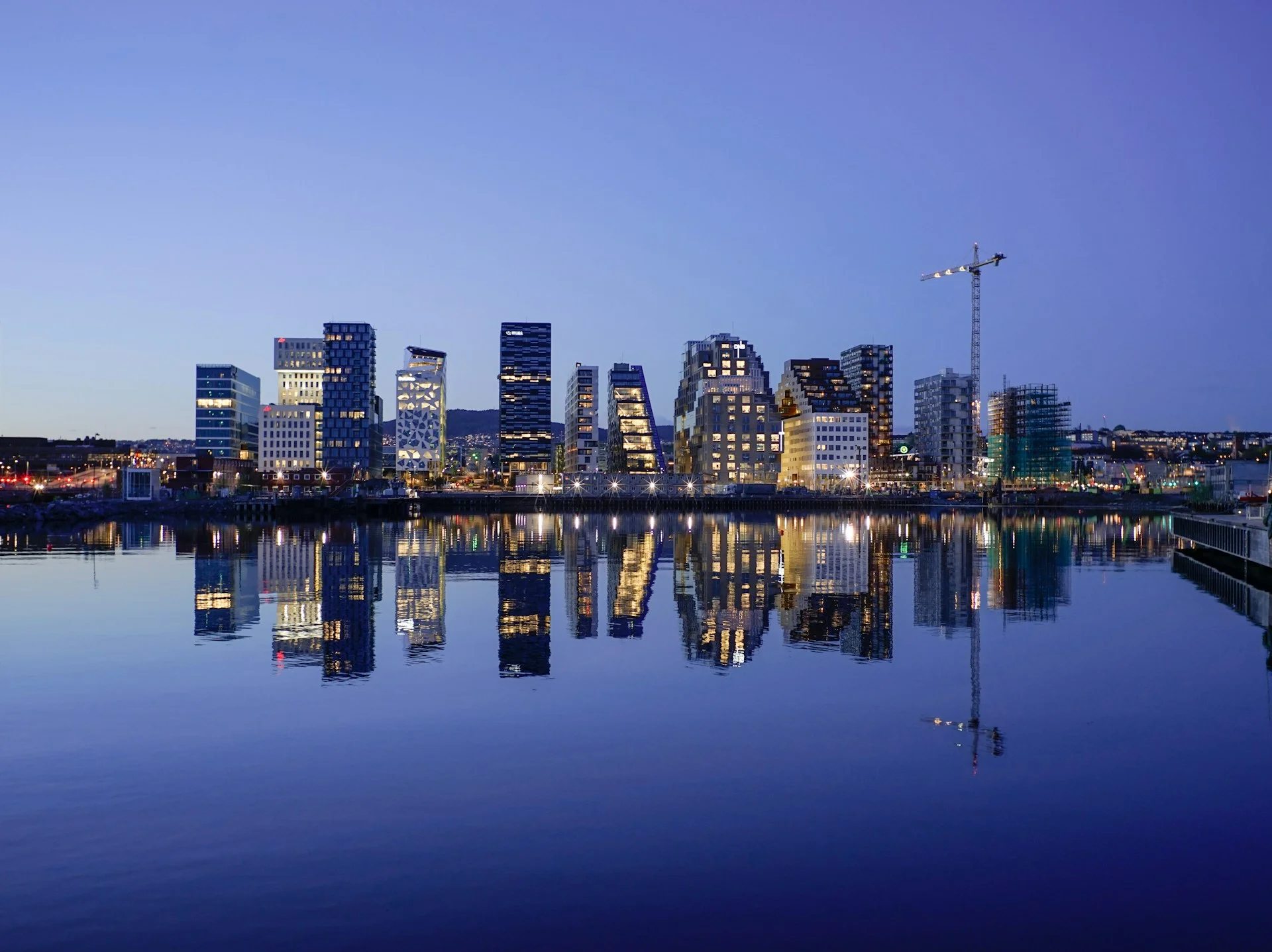
The inventory of sale by owner homes in Oslo reflects the city's architectural evolution and diverse neighborhoods. A significant portion consists of apartments (leiligheter) in functionalist and newer blocks in central boroughs like Frogner, Majorstuen, and Sagene, often sold by individuals or families moving to larger spaces. Characteristic wooden houses (villor) and townhouses (rekkehus) in family-centric areas such as Nordstrand and Vinderen are also prevalent in direct listings. Furthermore, the market includes unique assets like cabins (hytter) within the city's forest mark or modern apartments in emerging waterfront developments in Bjørvika. This range allows buyers to find property matching a precise lifestyle—from a central urban bolig to a nature-adjacent family home—through direct engagement with an owner who can provide specific insights into building culture, renovation history, and community feel.
Legal architecture for direct transactions in Norway
The Norwegian property transfer process is systematically designed to protect both parties, making direct purchases notably secure. The process is anchored by the sales agreement (kjøpekontrakt), a standardized yet comprehensive document. The buyer's critical task is conducting due diligence via the publicly accessible property register and obtaining a status report (tilstandsrapport) from a certified inspector, which is often mandated by the seller. Engaging a real estate lawyer (advokat) for final contract review is common, though not always required for domestic buyers. Financing must be pre-arranged, with a bank commitment typically needed before a binding offer is made. The transaction is finalized with a digital signing. This regimented process, where each party knows their obligations, allows the agent's traditional role to be minimized, enabling buyers and sellers to manage the transaction directly with confidence, supported by clear legal and financial frameworks.
Price determinants and direct market opportunities
Oslo is one of Europe's most expensive capital cities, with prices driven by location, property type, size (square meters), and standard (energy efficiency, modernity). The market is highly segmented, with premiums for waterfront views, proximity to the Marka forest, and central locations. In the direct sales segment, pricing can sometimes be more flexible. Motivated sellers—such as those facing job relocation, divorce, or inheritance—may use a direct listing to attract serious buyers quickly, potentially offering a price slightly below the market average to offset the buyer's perceived risk of not using an agent. However, the primary financial advantage remains the elimination of the agent's commission (typically 1-2.5% for the buyer), which can represent a significant sum. For a buyer, this means the total acquisition cost for a directly purchased home can be considerably lower than for a comparable agent-mediated property, effectively increasing immediate equity.
Neighborhood nuances in a fjord-side city
Oslo's distinct neighborhoods (bydeler) each offer a different value proposition for direct buyers. The inner city (Sentrum, Frogner, St. Hanshaugen) offers classic apartments with high demand and price tags, where direct sales are common among investors and professionals. The "West End" (Vestre Aker) features family homes with gardens and top schools, attracting direct sales from relocating families. The evolving "Fjord City" (Bjørvika, Tjuvholmen) showcases modern waterfront living, with direct listings from early investors. The more affordable and trendy East (Grünerløkka, Sofienberg) has a mix of renovated old apartments and new builds. In a direct purchase, the seller can provide unparalleled insight into the micro-location: noise patterns, sun exposure, local kindergarten waitlists, and the quality of the housing cooperative (borettslag) board—details that fundamentally affect livability and are rarely captured in listings.
Profile of a direct purchaser in the Oslo market
The individual who pursues a direct FSBO purchase in Oslo is typically financially literate, digitally savvy, and often has a professional background that values data over delegation. This includes Norwegians who are comfortable navigating public registries, expatriates working in Norway's oil, maritime, or tech sectors who conduct extensive independent research, and international investors attracted to the country's stability. A key segment is also young professionals and academics who are first-time buyers and are highly motivated to save the buyer's commission to increase their down payment. These buyers view the agent not as a necessary guide, but as a cost to be avoided in a system already designed for transparency. They prioritize direct access to the seller's lived experience and documentation over marketed narratives.
Case examples of direct acquisition in Oslo
Consider a Swedish engineer transferring to Fornebu. He finds a townhouse in Lysaker through a direct listing. He reviews the publicly available transaction history for the building, commissions his own tilstandsrapport, and negotiates directly with the seller, a lawyer moving abroad. They agree on a price 3% below the last comparable sale, with the saved buyer's commission covering the cost of a full kitchen upgrade. In another scenario, a Norwegian couple sells their Frogner apartment directly to a doctor from Akershus University Hospital. The sellers provide a decade of housing cooperative meeting minutes and financial statements, proving the building's excellent fiscal health. The buyers, by purchasing directly, avoid a 1.8% buyer's fee, allowing them to stretch their budget to win in a competitive bidding situation without increasing their mortgage.
Critical questions for the direct buyer in Oslo
What is the financial health of the housing cooperative (borettslag)? For apartments, this is paramount. Request the last two years' annual reports, balance sheets, and plans for major renovations. A direct seller should provide these willingly. High debt or upcoming assessments significantly impact value.
How does the Norwegian mortgage regulation affect my offer? Financing must be pre-approved (forholdsmessig vurdert). A direct seller will expect proof of financing capacity with any serious offer. Understanding the 85% loan-to-value cap for secondary homes is crucial for planning.
What are the specific costs for a foreign buyer? While Norway has no restrictions on foreign ownership, non-residents face stricter mortgage terms (often 40-50% down payment) and must obtain a D-number for the transaction. A direct seller who has dealt with international buyers can share practical insights.
How does the property perform in winter? Inquire about heating costs (often district heating), insulation quality, and snow removal arrangements for houses. A direct owner can give exact historical cost figures and personal experience.
What is the seller's reason for moving, and what is the timeline? In a direct deal, this can be discussed openly. A seller relocating for a job overseas next month is likely more motivated and flexible than one just testing the market, directly impacting negotiation dynamics.
Conclusion: Direct engagement in a model market
Opting for a direct property purchase in Oslo is a rational choice that aligns with the very principles of the market itself: transparency, efficiency, and personal responsibility. It is a strategy that converts the city's robust regulatory frameworks and cultural trust into direct financial benefit and informed decision-making. By choosing to deal directly with owners, you gain unfiltered access to information, avoid substantial intermediary fees, and take full control of the most significant investment of your life. In a city where nature meets urbanity and transparency is ingrained, the most logical path to homeownership is often the most direct one.