
Commercial Real Estate Brokers in UzbekistanVerified assets for strategic acquisition
Best offers
in Uzbekistan
Benefits of investing in commercial real estate in Uzbekistan

Capital momentum
Uzbekistan gains commercial relevance from Tashkent's concentrated business services, broad urban spending, and infrastructure growth, giving commercial property a demand base that reaches beyond one sector or one city center
Corridor fit
The strongest asset logic in Uzbekistan usually comes from matching offices to Tashkent, warehouses to transport and production routes, and hospitality or service units to cities where business travel and tourism overlap
Clear screening
VelesClub Int. helps read Uzbekistan by separating Tashkent offices, regional industrial property, and tourism backed service markets, so buyers compare occupier depth, route value, and local commercial roles before narrowing
Capital momentum
Uzbekistan gains commercial relevance from Tashkent's concentrated business services, broad urban spending, and infrastructure growth, giving commercial property a demand base that reaches beyond one sector or one city center
Corridor fit
The strongest asset logic in Uzbekistan usually comes from matching offices to Tashkent, warehouses to transport and production routes, and hospitality or service units to cities where business travel and tourism overlap
Clear screening
VelesClub Int. helps read Uzbekistan by separating Tashkent offices, regional industrial property, and tourism backed service markets, so buyers compare occupier depth, route value, and local commercial roles before narrowing
Property highlights
in Uzbekistan, from our specialists
Found: 20

Urban commercial premises 40 m2 in Nukus, Uzbekistan
commercial premises
40 m2

1 500 $
Urban commercial premises 75 m2 in Andijan, Uzbekistan
commercial premises
75 m2
21 400 $
Landmark commercial premises 206 m2 in Andijan, Uzbekistan
commercial premises
206 m2
33 400 $
High-profile commercial premises 627 m2 in Nukus, Uzbekistan
commercial premises
627 m2
39 200 $
Efficient commercial premises 500 m2 in Namangan, Uzbekistan
commercial premises
500 m2
39 500 $
Contemporary commercial premises 348 m2 in Andijan, Uzbekistan
commercial premises
348 m2
45 700 $
Modern commercial premises 308 m2 in Nukus, Uzbekistan
commercial premises
308 m2
48 900 $
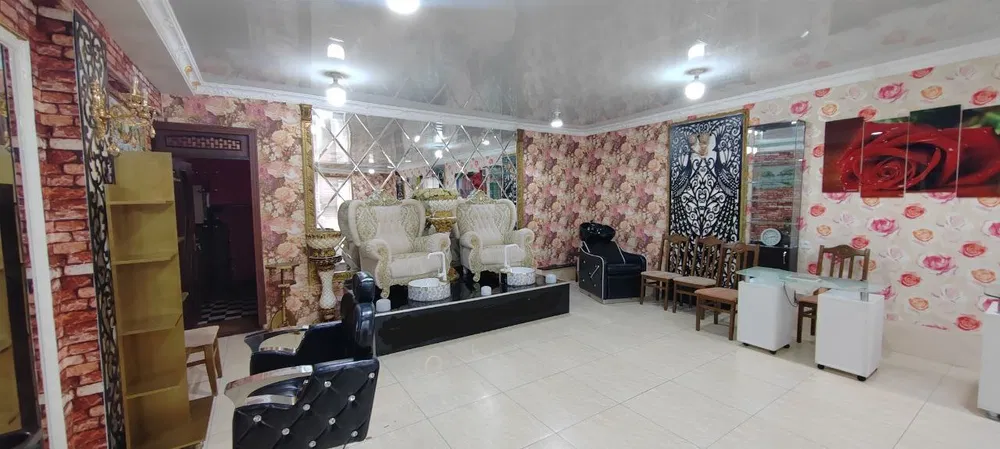
Contemporary commercial premises 105 m2 in Samarkand, Uzbekistan
commercial premises
105 m2
80 000 $
Strategic commercial premises 533 m2 in Nukus, Uzbekistan
commercial premises
533 m2
80 400 $
High-profile commercial premises 125 m2 in Samarkand, Uzbekistan
commercial premises
125 m2
95 000 $


Useful articles
and recommendations from experts
How commercial property in Uzbekistan fits strategy
Why commercial property in Uzbekistan stays relevant
Commercial property in Uzbekistan matters because the market is no longer read only through one capital city and one narrow business function. Tashkent gives the country its strongest office and service core, but that is only the first layer. Production belts, road and rail movement, logistics support, and regional business centers give the market a second layer. Samarkand and Bukhara add a third layer through hospitality, food and beverage, and mixed service demand tied to tourism and business travel. This makes commercial real estate in Uzbekistan broader than a simple office story and more structured than a tourism only market.
That is what makes commercial property in Uzbekistan commercially useful at country level. A Tashkent office, a warehouse near a transport corridor, a mixed service building in the Fergana Valley, and a hospitality asset in Samarkand do not belong to the same commercial map. They answer different occupier needs and should never be screened as versions of the same opportunity. Uzbekistan becomes easier to shortlist when the buyer separates capital city services, route based operations, and tourism backed service property from the beginning.
Tashkent keeps office space in Uzbekistan anchored
Office space in Uzbekistan begins with Tashkent because no other city offers the same concentration of administration, finance related services, education, healthcare, trade, and everyday urban business activity. For many buyers, that makes the capital the natural first screen because it gives office space in Uzbekistan its clearest national meaning. In a market of this size, concentration is not a weakness. It creates clarity and makes stronger districts easier to distinguish from weaker ones.
That does not mean every office in Tashkent should be screened the same way. Some assets fit stronger formal business occupancy and longer lease logic. Others work better for owner occupiers, clinics, training businesses, advisory firms, or mixed service operators that need customer movement and practical access more than a corporate image. In Uzbekistan, the stronger office asset is rarely just the newest one. It is the one whose district, scale, and transport logic fit the likely user most clearly.
This is one reason country level screening needs discipline. A better positioned office in a stronger part of Tashkent can be more practical than a larger building in a weaker micro location, because tenant depth and daily city rhythm matter more than broad category language alone.
Across Uzbekistan demand changes by corridor and city
The first commercial rule beyond Tashkent is that commercial demand in Uzbekistan changes quickly by geography. Some regional cities matter because they support manufacturing, wholesale trade, logistics, and mixed business use. Others matter because tourism, hospitality, and visitor services create a different commercial rhythm. The Fergana Valley broadens the picture through population density, production, trade, and practical service demand. Central logistics routes matter because the country functions through visible transport and distribution patterns rather than through one isolated urban economy.
This matters because commercial property in Uzbekistan should not be screened through one national lens. A building in Tashkent belongs to a different commercial system from an operational asset near Navoi or a hospitality property in Samarkand. The stronger decision usually comes from identifying whether the property belongs to the office and service economy, the transport and production layer, or the visitor and mixed service layer. Uzbekistan rewards that kind of territorial reading.
Warehouse property in Uzbekistan follows routes and production belts
Warehouse property deserves serious weight because Uzbekistan depends on domestic distribution, trade support, industrial movement, food supply, and route efficiency across a large inland territory. This is one of the clearest reasons warehouse property in Uzbekistan should be treated as a major category rather than a secondary one. A facility in the right corridor can support storage, wholesale trade, manufacturing supply, retail stocking, or direct owner occupied operations in ways that are easy to read commercially.
The key point is function. A warehouse becomes commercially strong when it supports a visible chain of movement. A building linked to Tashkent, to the Fergana Valley, or to central transport and production routes usually has a clearer role than a similar facility in a weaker position. In this market, route value often matters more than scale. The stronger operational asset is usually the one that reduces friction in a real supply system, not the one with the biggest footprint on paper.
This also explains why industrial and mixed operational property deserve attention. In Uzbekistan, a practical storage or support asset can sometimes be easier to justify than a formal office because the local business need is clearer and more repeatable every day.
Samarkand and regional cities broaden commercial property in Uzbekistan
One of the strongest features of the market is that commercial property in Uzbekistan does not stop at the capital. Samarkand matters because tourism, hospitality, restaurants, conferences, and mixed service demand reinforce one another there. Bukhara works through a similar but more selective heritage and visitor economy. These are not cities to screen like Tashkent. They are stronger when they are read through guest flow, food and beverage turnover, and the surrounding service ecosystem rather than through a narrow office narrative.
At the same time, regional commercial cities tied to trade and industry can support a different kind of property. In those markets, mixed service buildings, practical offices, owner occupier premises, and support property often make more sense than broad speculative office formats. This gives commercial real estate in Uzbekistan a more varied and useful second layer than a capital only reading would suggest.
What retail space in Uzbekistan depends on
Retail space in Uzbekistan is commercially important because it is supported first by daily urban use and only then strengthened by tourism. Tashkent remains the strongest retail reference point because of residents, workers, students, healthcare users, and mixed neighborhood demand. That gives the capital the broadest and most stable service economy in the country. In practical terms, the stronger retail asset is usually not the one with the loudest frontage. It is the one tied to a visible and repeatable spending rhythm.
Regional cities can also support practical retail and food service property where local routine is visible. Samarkand and Bukhara add another layer where visitor demand strengthens restaurants, mixed street level units, and hospitality related services. In Uzbekistan, food and beverage, convenience formats, healthcare adjacent services, education linked demand, and mixed customer facing units often create a clearer commercial story than broad destination language alone.
Pricing commercial property in Uzbekistan depends on role
Pricing only makes sense when the role of the asset is clear. In Tashkent offices and mixed service buildings, stronger values are usually supported by district quality, access, and how well the premises fit real occupiers. In warehouse and operational property, value is shaped more by corridor relevance, route efficiency, and whether the building serves a visible movement chain. In hospitality and service assets, pricing depends more on district strength, surrounding services, and the durability of turnover.
That is why buyers who want to buy commercial property in Uzbekistan should avoid broad comparisons between unlike assets. A cheaper office outside the strongest service logic may still be less practical than a better positioned one in Tashkent. A larger support building away from the main route network may be less useful than a smaller but better connected facility. A tourism asset with strong visual appeal may still be weaker than a simpler property in a district with clearer year round activity. The most useful comparison in Uzbekistan is not low price against high price. It is clear demand against unclear demand.
How VelesClub Int. structures commercial property in Uzbekistan
Uzbekistan becomes easier to navigate when it is divided into four practical commercial readings. The first is Tashkent as the office, administration, and mixed service core. The second is the route and production layer, where warehouses and operational premises support trade, storage, and industrial business use. The third is the tourism and hospitality layer, strongest in cities such as Samarkand and Bukhara. The fourth is the regional service layer, where selected cities support practical owner occupier and mixed commercial property through local business demand.
VelesClub Int. helps structure commercial property in Uzbekistan along these lines so buyers compare assets by function, district, and likely occupier base rather than by broad category labels alone. That matters in a market where growth language can easily blur the real differences between offices, logistics, service property, and hospitality. With clearer structure, Uzbekistan becomes easier to shortlist and easier to screen with discipline.
Questions that clarify commercial property in Uzbekistan
Why does Tashkent dominate office space in Uzbekistan more than other cities
Because Tashkent concentrates administration, finance related services, education, healthcare, trade, and the broadest year round urban business activity, which gives office assets there a clearer occupier base than elsewhere in Uzbekistan
Why is warehouse property in Uzbekistan strongest along major routes instead of in isolated locations
Because the strongest operational demand comes from visible movement between production areas, urban consumption, and distribution networks, so route linked assets usually support real daily business use instead of standing outside the main commercial flow
Can hospitality property in Uzbekistan be stronger than offices in some cities
Yes. In Samarkand and Bukhara, hospitality and mixed guest service assets can be more practical than formal offices because visitor turnover and surrounding services create a clearer commercial role
Do regional cities in Uzbekistan matter mainly for offices or for mixed use
Mostly for mixed use, service property, and owner occupier formats. Outside Tashkent, assets often make more sense when tied to trade, education, healthcare, tourism, or production support rather than to a broad office narrative
What usually makes one Uzbekistan commercial asset more practical than another
The strongest asset is usually the one that matches the main demand engine behind its location, whether that is Tashkent office depth, corridor movement, or tourism backed service turnover inside a clear local ecosystem
Choosing commercial property in Uzbekistan with better discipline
Uzbekistan belongs on a commercial shortlist when the buyer wants a market that is compact in its core demand, readable in its geography, and commercially differentiated by clear local roles rather than by noise. Offices, warehouses, mixed service units, hospitality linked assets, and owner occupier property can all make sense, but only when they are matched to the part of Uzbekistan that actually supports them.
Seen that way, commercial property in Uzbekistan becomes less generic and more actionable. VelesClub Int. helps turn country level interest into a clearer strategy, a tighter territorial screen, and a more confident next step in commercial asset selection